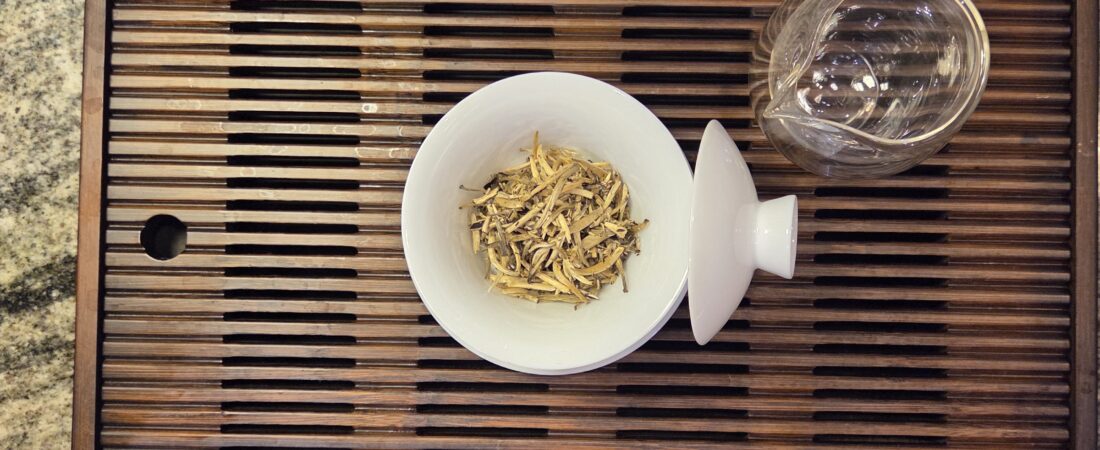
Across the history of Chinese tea brewing, the table kept changing—from Lu Yu’s cauldron to the powdered Song bowl and whole-leaf infusion. The tools reveal that tradition has never meant standing still.
The gesture that feels obvious
Put leaves in a vessel. Add hot water. Wait.
The gesture is so familiar that it can feel almost outside history—as if people discovered tea, discovered steeping, and spent the following centuries changing only the cups.
But the cup we recognise is one version of tea, not its permanent form. In different periods and communities, tea was compressed, heated, ground, cooked with water, worked into a pale foam, or infused as a whole leaf. These were not merely different recipes. Each preparation required its own objects, movements and standards for deciding whether a bowl was good.
The useful history is not a neat procession from boiling to whisking to steeping. Methods overlapped. Old practices survived new fashions; regional habits did not change at the same speed; and the records favour courts, scholars and connoisseurs over ordinary kitchens.
Still, three tables let us see how dramatically tea could change.
A cake, a grinder and a cauldron
In the later eighth century, Lu Yu’s Classic of Tea described an exacting way to prepare tea. The processed leaf could arrive as a cake rather than as the recognisable loose leaves many of us brew today. Before drinking, the cake was heated, ground and sieved.11
Then came the cauldron.
Lu Yu paid close attention to the stages of boiling water. He allowed a little salt, added tea powder as the water reached a later stage, and used reserved water to control the surge and preserve the surface foam. The tea and its foam were ladled into several bowls.12
Calling this “boiled tea” is broadly understandable, but it can give the wrong picture if we imagine leaves rolling away for a long time like a medicinal decoction. “Tea powder briefly cooked or simmered in a cauldron” is closer to the movement Lu Yu describes.
His account also needs a boundary. Lu Yu was prescribing what he considered refined, not recording every Tang household. Other preparations combined tea with ingredients such as ginger, scallion, citrus peel or aromatics; Lu Yu criticised mixtures that, in his view, buried the tea. The Classic of Tea is an influential argument about how tea ought to be made, not a census of how everyone drank it.13
The tools, however, were real. A ninth-century imperial tea set found beneath Famen Temple includes a partly gilded silver grinder dated 869, along with a sieve, containers and other preparation objects. The materials belong to courtly splendour, not the average home, but the grinding system is made physical: this tea needed to be transformed again before it could enter the water.14
When the bowl became the mixing vessel
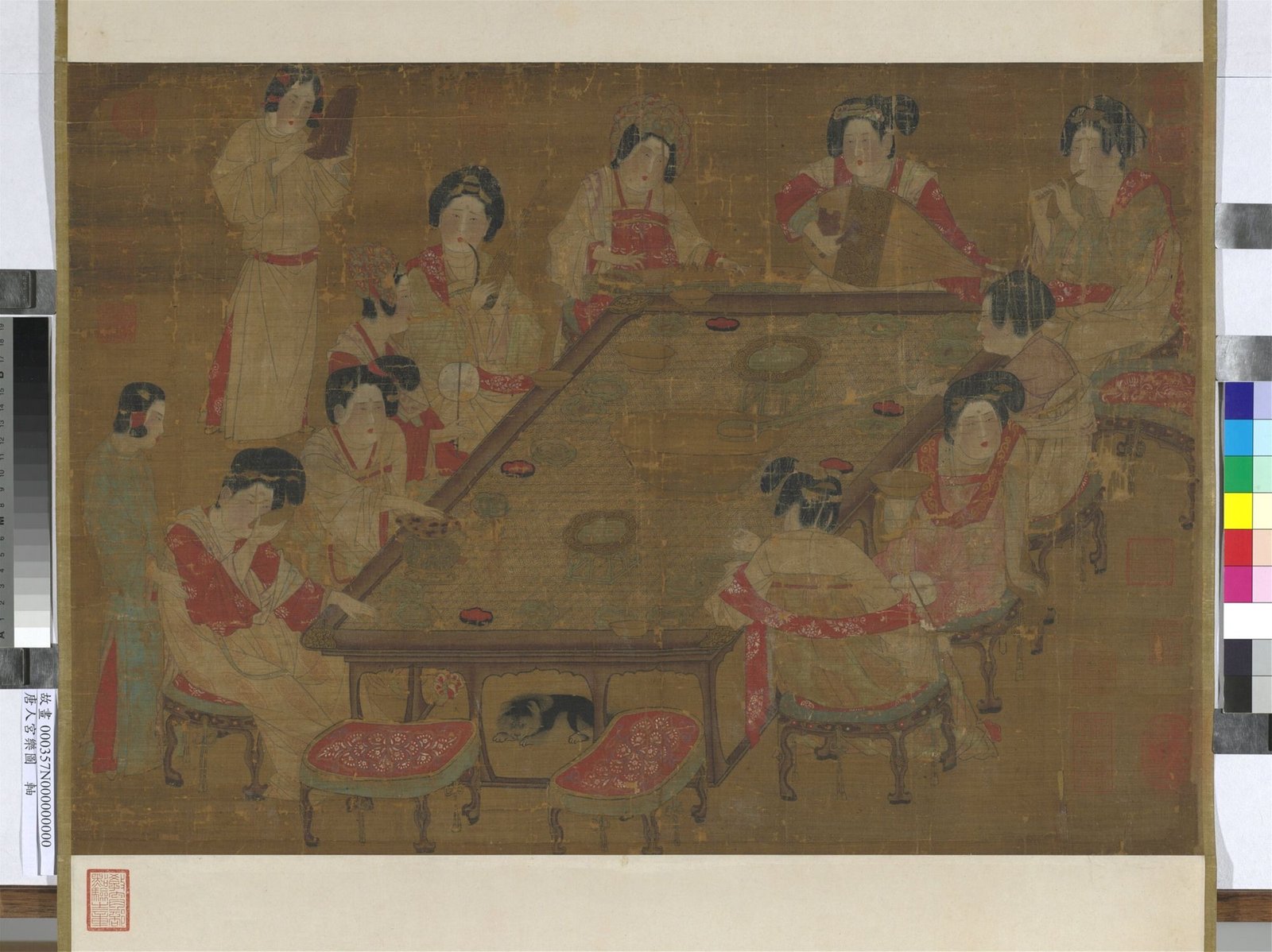
The Song table organised that transformation differently.
Some of its most celebrated teas were still manufactured as elaborate cakes. They were crushed, ground and sieved into fine powder. But instead of throwing that powder into the cauldron, the preparer placed it in a warmed bowl. A little hot water could first work the powder into a paste; more water followed in controlled additions while the mixture was agitated into a pale, lasting foam.15
This family of practices is known as dian cha. Translating the term simply as “whisking tea” hides part of the skill. The water stream, the ratio of powder to water, the warmth and shape of the bowl, and the movement of the hand all mattered.
Huizong’s early twelfth-century Treatise on Tea discusses these variables in extraordinary detail. Its ideal bowl was dark, slightly deep and wide enough for the whisk to move freely. Against a dark Jian-ware glaze, pale tea and foam were easier to see. A thicker bowl also held heat.16
The drink had changed in texture and appearance. So had the expert eye. A skilled preparer now managed flow and agitation, while competitions could judge the colour, fineness and persistence of the foamed surface.
Yet the most beautiful records come with a warning. Court treatises, literati writing, tribute systems and tea competitions tell us where elite attention gathered; they do not show every Song cup. Historian James Benn notes that tea had become an everyday necessity across social levels, while boiling powder and simmering leaves continued beside the refined bowl practices that dominate the surviving literature.17
Song tea culture was not one ceremony shared identically by an empire. It was a field of practices, of which the powdered, foamed bowl became especially visible.
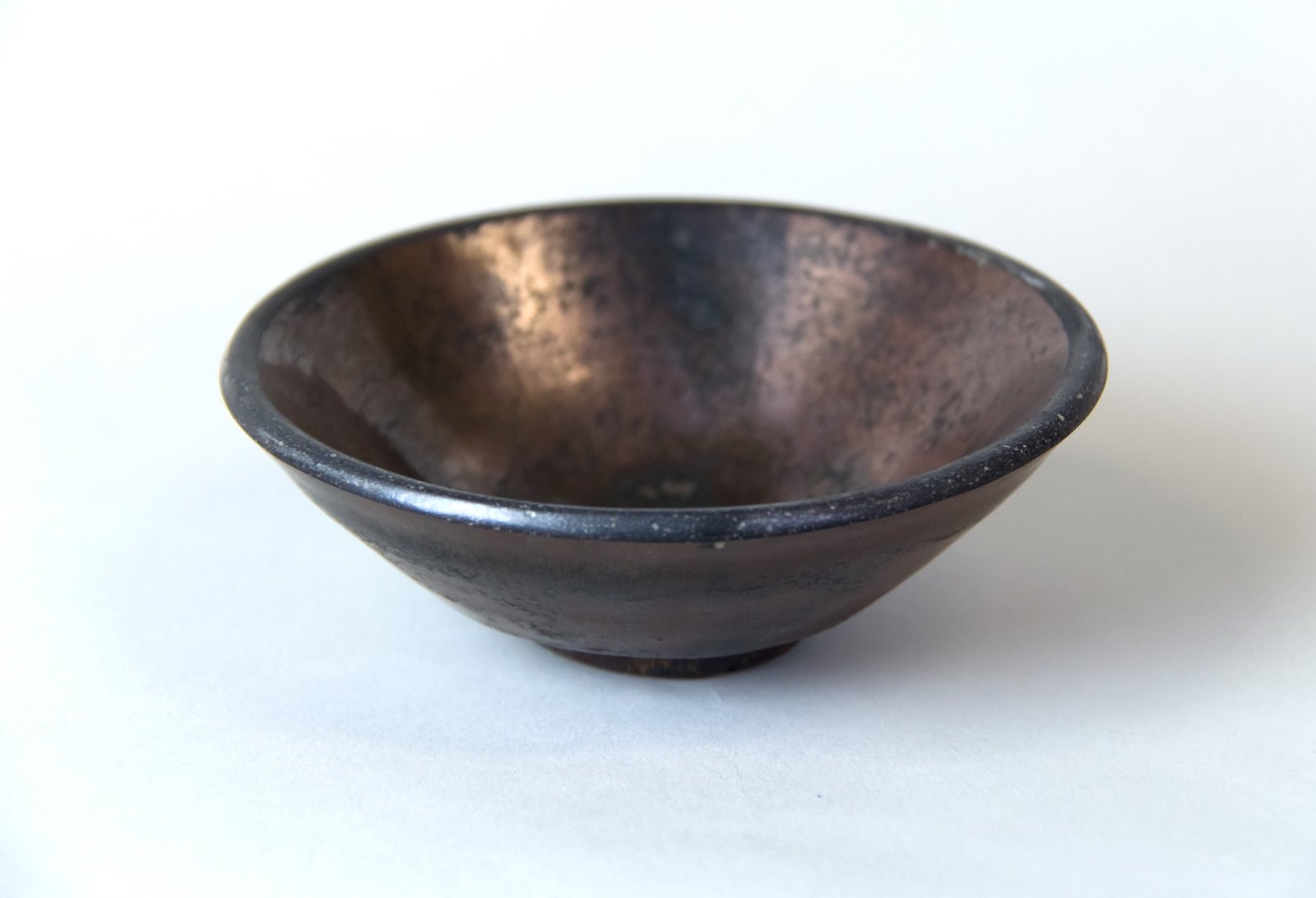
Change the method, and the entire table changes.
The rise of the whole leaf
The next transition is often assigned a single date.
In 1391, the Hongwu emperor ordered prestigious tribute from the Jian’an region to arrive as leaf or bud tea rather than as costly compressed cakes. The order mattered. It changed what the court requested and reduced labour attached to an elaborate tribute form.18
But it did not invent loose tea, and it did not cause every grinder and whisk in China to disappear overnight. Leaf and bud preparations existed earlier. Research on Ming tea writing shows that some Jiangnan elites continued preparing powdered tea in the Song manner during the first half of the dynasty.19
What followed was not an instant replacement but a widening change in production, taste and equipment. By the sixteenth century, Yixing stoneware teapots were being promoted among Jiangnan literati. By the beginning of the seventeenth, whole-leaf steeping had become standard among the connoisseurs visible in late-Ming sources.20
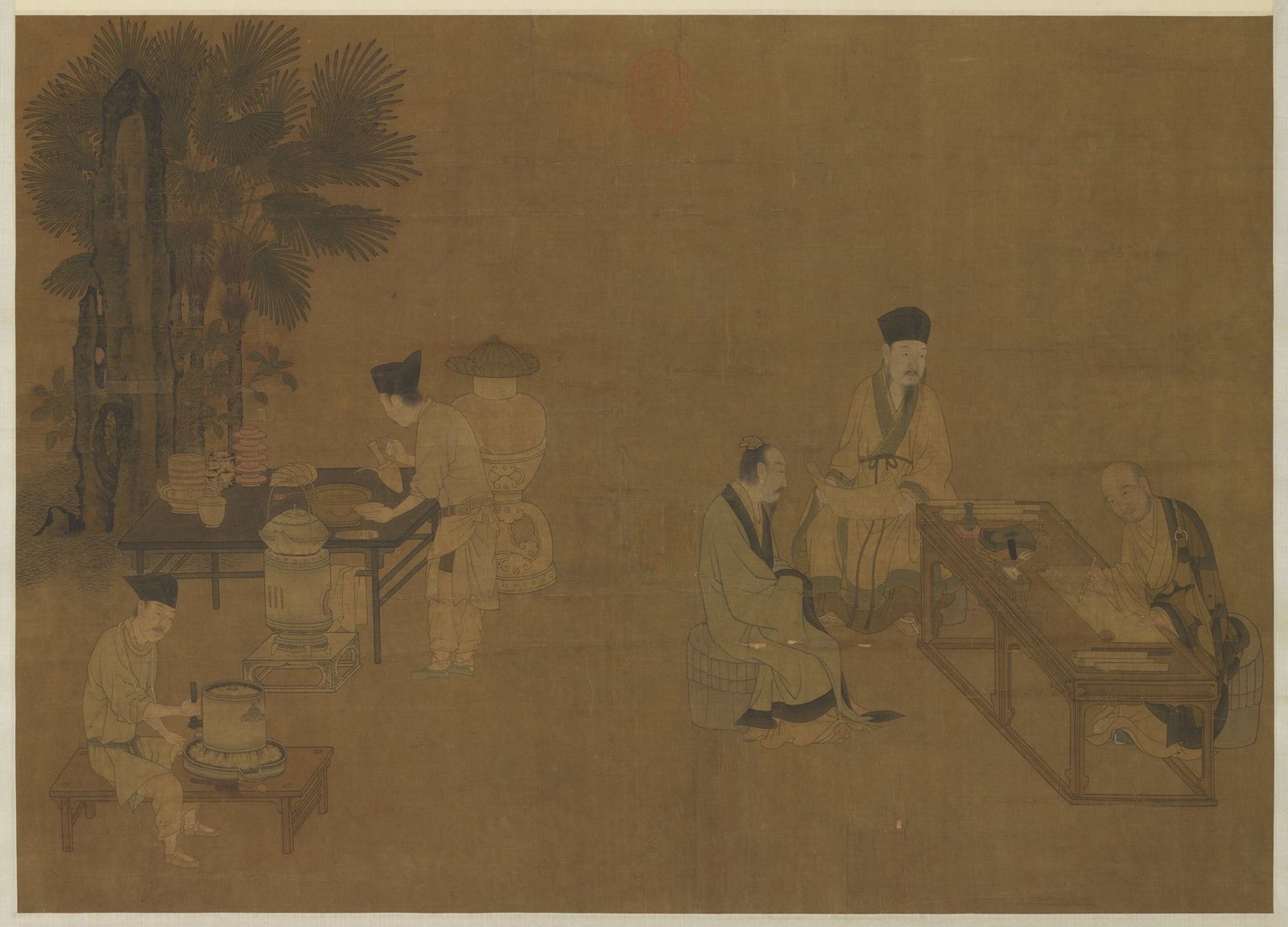
Tang Yin’s Tasting Tea, painted around 1500, makes the altered table visible. A servant tends the heat; nearby sit a teapot and bowl. Grinding and sieving no longer have to occupy the centre of every session. The leaf can open inside an infusion vessel, and clear liquor can be poured into a cup.21
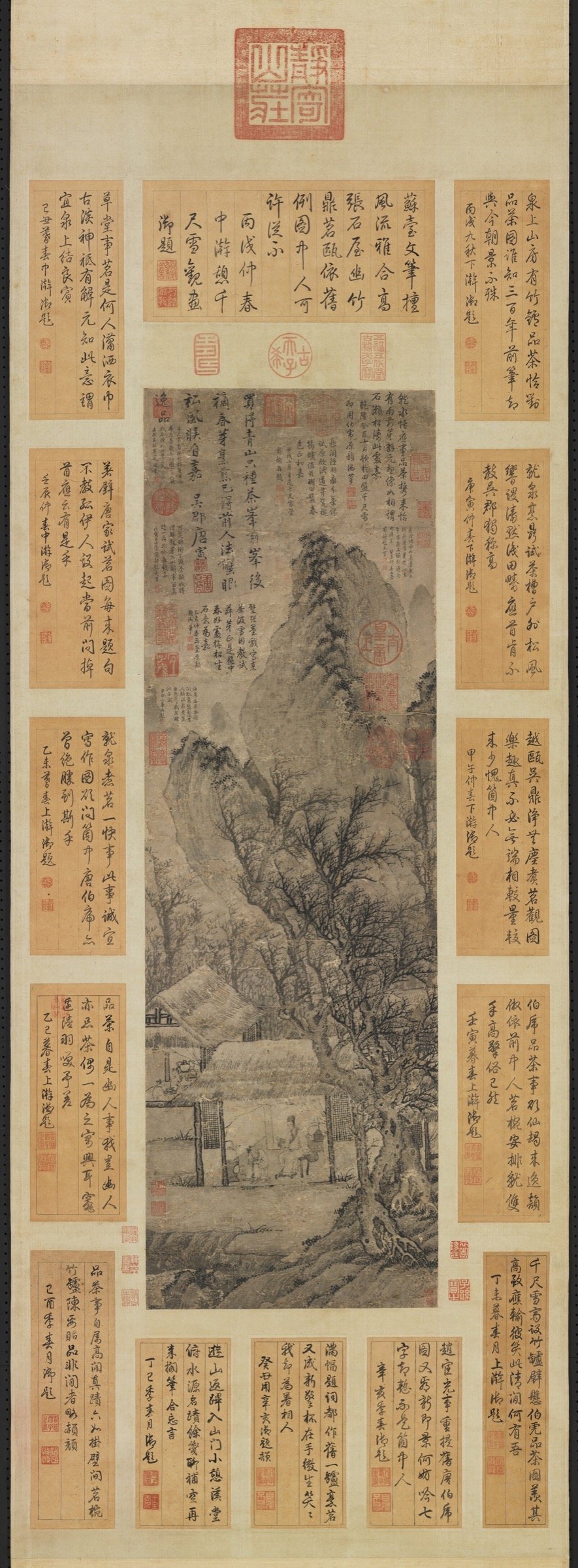
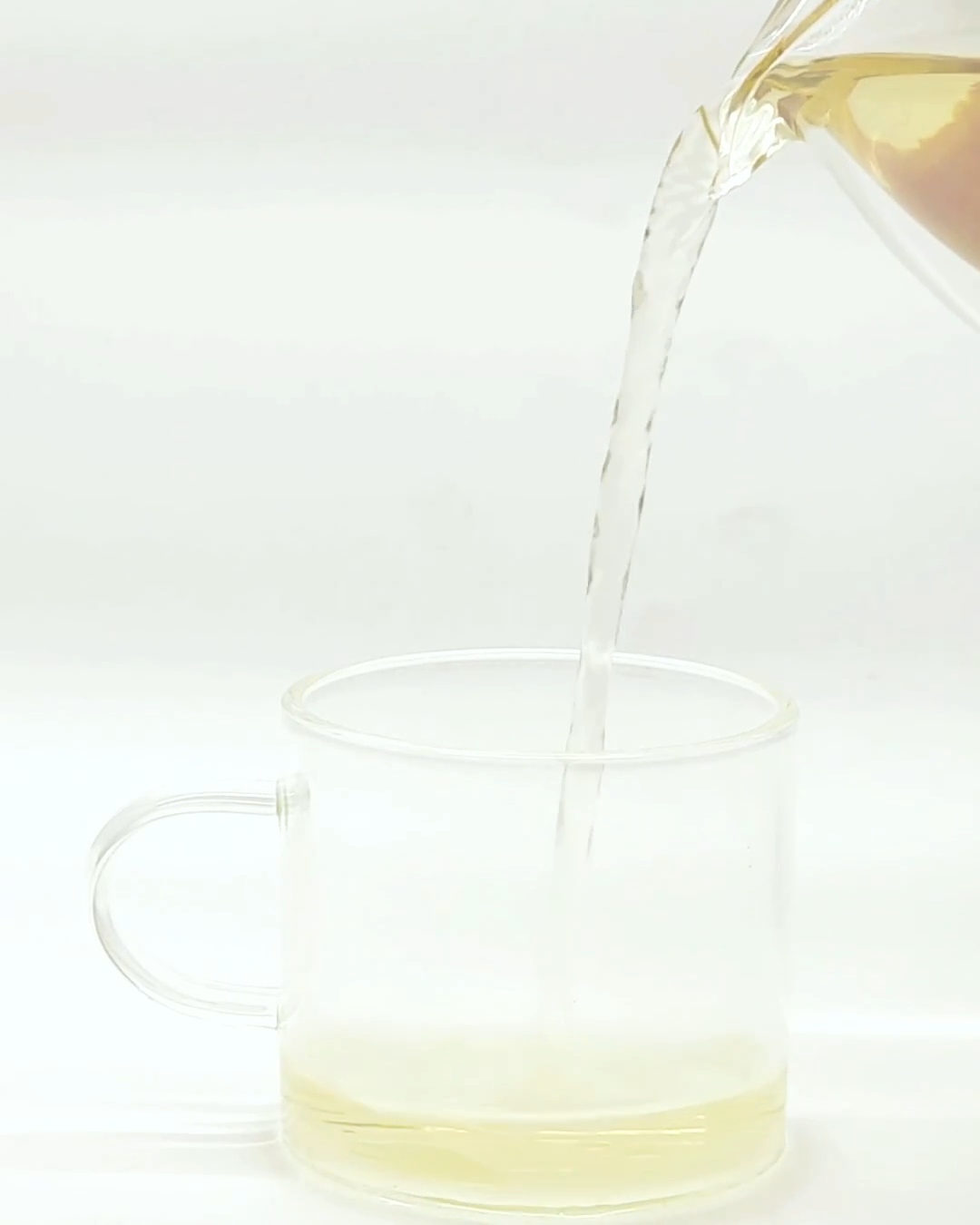
When the method changes, the table changes
Place the three systems side by side and the history stops looking like a row of dynasty names.
On Lu Yu’s table, the key transformation happens before and inside the cauldron: heat the cake, grind it, sieve it, add the powder to water, then ladle the liquor and foam.
On the Song table, the bowl becomes the site of preparation: refine the powder, measure it, add hot water from an ewer, agitate, and watch the surface.
On the late-Ming connoisseur’s table, recognisable leaves and an infusion vessel move forward: control the water, give the leaves room and time, then pour.
One is not a failed version of the next. Each table solves a different problem and teaches a different form of attention. A grinder is not primitive because a teapot came later. A foamed bowl is not incomplete because the leaf cannot be admired at the bottom. Whole-leaf infusion is not automatically more sophisticated because it resembles what many of us do now.
Lu Yu’s cauldron
Processed cake → heat → grind and sieve → powder enters heated water → ladle tea and foam into bowls.
Prominent Song bowl
Compressed tea → grind and sieve → powder in a warmed bowl → staged hot water and agitation → pale foam.
Increasingly prominent Ming infusion
Recognisable leaf → hot water in an infusion vessel → clear liquor poured into a cup.
One leaf, different tables. Methods overlap, travel, survive and are remade; a newly prominent method did not erase every older practice.
Tradition is not permanence
The methods did not stay inside their dynasty boxes.
Powdered-tea practices travelled through Buddhist networks to Japan and helped lay the foundation for what became chanoyu. That Japanese tradition took shape over centuries; it is not Song dian cha frozen intact. Later, Chinese loose-leaf steeping also influenced Japanese sencha culture during the Edo period.22
Compressed tea did not vanish either. It continues in several forms, although a modern tea cake should not be mistaken for a Tang cake with the same manufacture or intended preparation.
This is why the history matters at a contemporary tea table. The vessel in front of us is not the inevitable endpoint of tea. It is one arrangement of leaf, water, heat, time and attention—the same reason we treat a brewing recipe as a place to begin, not a commandment. An arrangement becomes familiar because people keep selecting, adapting and repeating it.
Tea has never stood still. Every method we now call traditional was once one possibility among others.
Verification
Footnotes
- Lu Yu, Chajing, chapters 3–5; James A. Benn, Tea in China: A Religious and Cultural History (University of Hawai‘i Press, 2015).
- Lu Yu, Chajing, chapter 5.The linked English rendering is used as an access aid and checked against the Chinese text and Francis Ross Carpenter’s published translation.
- James A. Benn, “Simmering, Whisking, Steeping”; Lu Yu, Chajing, chapters 5–6.
- Kan Shuyi, “Secrets of the Fallen Pagoda”, National Heritage Board, Singapore.The institutional article cites the 2007 Famen Temple excavation report.
- Zhao Ji, Daguan chalun, “Dian”; Kin Sum Li, “A Bowl of Good Tea in the Northern Song Dynasty”, East Asian Science, Technology, and Medicine 54, no. 1 (2022): 3–41.
- Zhao Ji, Daguan chalun, “Bowls”; Metropolitan Museum of Art, Song Jian tea bowl.
- James A. Benn, Tea in China, chapter 6; Xiaolin Duan, “Tea and Place”, Journal of Chinese History 10 (2026).
- Steven D. Owyoung, “A History of Tea in China”, Transactions of the Royal Asiatic Society Korea Branch 86 (2011): 115; Livio Zanini, “A Record of the Tea Retreat”, Ming Qing Yanjiu 27 (2023): 15–16.
- Zanini, “A Record of the Tea Retreat,” 15–16; Hong Kong Museum of Art, “History of Tea” exhibition notice.
- Zanini, “A Record of the Tea Retreat,” 15–16; Hong Kong Museum of Art, K.S. Lo Collection.
- National Palace Museum, Taipei, Tang Yin, Tasting Tea, c. 1500.
- Kyoto National Museum, “Chanoyu: Tea in the Cultural Life of Kyoto”; Rebecca Corbett, “Arts of the Tea Ceremony”, Oxford Bibliographies in Art History (2025).