The regional practice, Taiwanese reinvention and Japanese influence behind the modern image of gongfu tea.
Did the modern “Chinese tea ceremony” come from Japan?
Not exactly. But part of what now looks unmistakably Chinese travelled through a much wider East Asian conversation before it became familiar to the world.
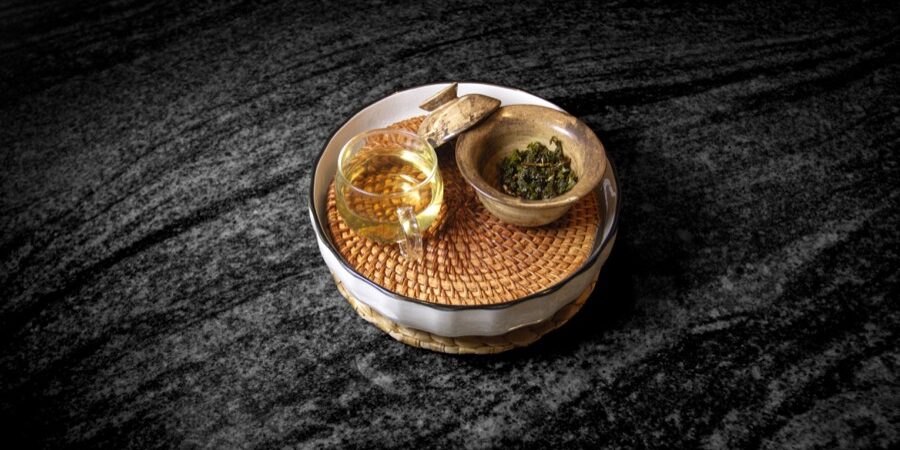
Put a small pot or gaiwan on a table. Add several tiny cups. Pour the same leaves again and again. Even if nobody names the method, many people will recognise the scene as “Chinese tea.” Outside China, it may be introduced more formally as the Chinese tea ceremony.
The image is familiar. Its history is not a straight line.
Gongfu did not begin as one standard ceremony practised across China. It developed through regional tea cultures along the southeast coast, became embedded in everyday life in Chaoshan, provided the technical foundation for modern tea art in Taiwan, absorbed selected Japanese influences, and then circulated much more widely.
What now appears ancient and national is also regional, modern and mobile.
That does not make it fake. It makes it alive.
Before it looked national, it looked local
The difficulty with asking where gongfu began is that the historical record does not provide one neat birthplace.
By the late eighteenth century, writer and gastronome Yuan Mei had encountered tea in the Wuyi Mountains of Fujian prepared in very small pots and walnut-sized cups. The same leaves were infused repeatedly. Yuan did not call the method gongfu tea, but its material logic would be recognisable to many gongfu drinkers today.1
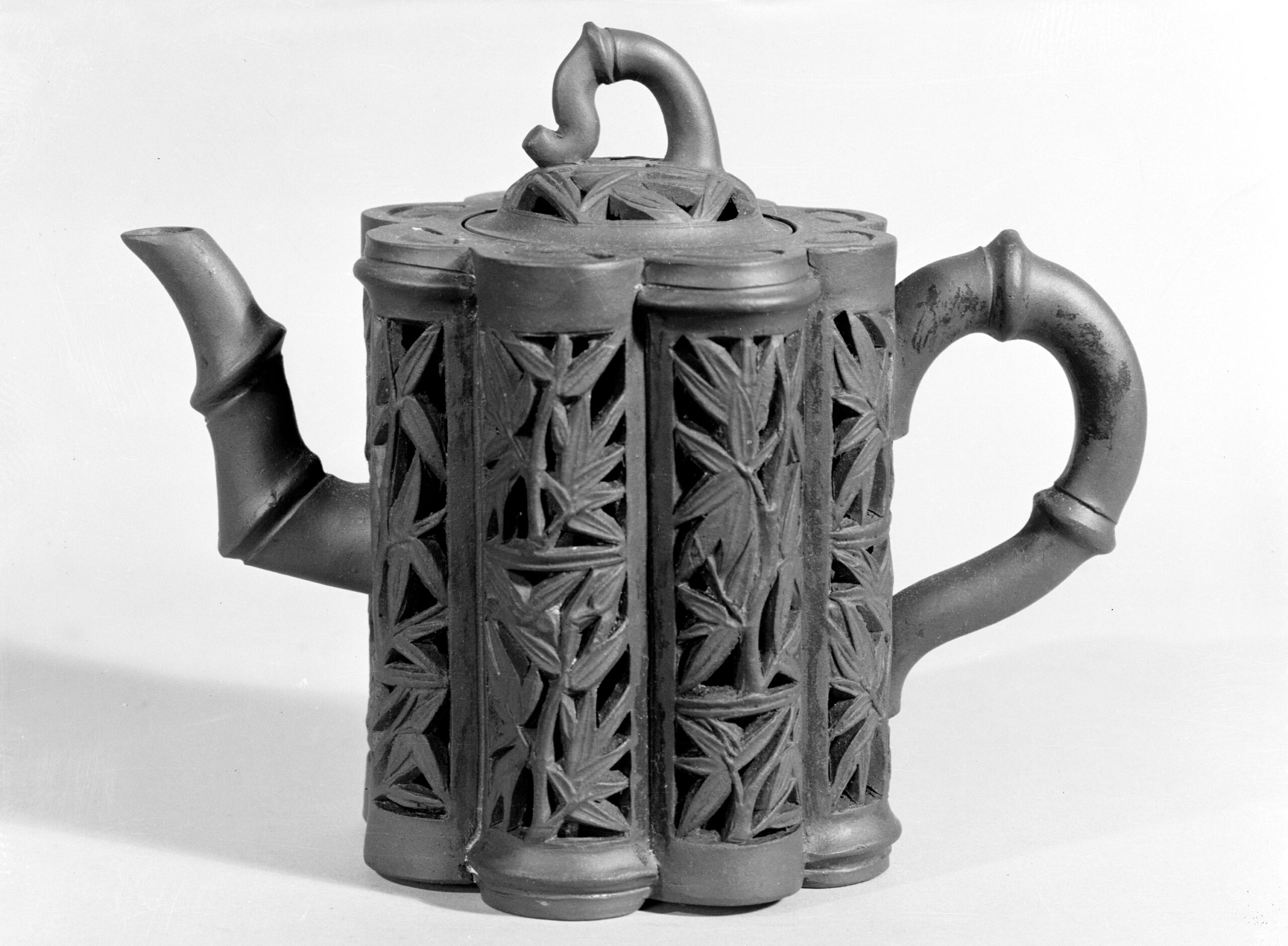
A work completed in 1801 gives us something more explicit. While describing tea in Guangdong, the official Yu Jiao used the term 工夫茶—gongfu tea. His account included an Yixing clay pot, small cups arranged on a porcelain dish, a stove, a kettle, a paper fan and bamboo tools. He was not retroactively describing a scene that modern writers later decided to call gongfu. He named the practice directly.2
That does not mean Yu Jiao invented the name or witnessed the method being born. He was documenting an already established practice. His text is best treated as one of the earliest surviving written uses, not a certificate of origin.
The Fujian and Guangdong accounts are close in time and connected to neighbouring southern tea worlds. Together they show why a single-birthplace story is difficult to sustain. What we can say more confidently is that gongfu became particularly identified with Chaozhou and the wider Chaoshan region of eastern Guangdong, while related practices existed across southern Fujian and travelled with communities from the southeast coast.3
For much of China, this was not simply how tea was made. As late as 1937, the Fujian-born writer Lin Yutang could describe gongfu preparation as an art generally unknown in northern China.4 It was one Chinese tea tradition among many—not yet the image standing in for all the others.
In Chaoshan, tea did not wait for a ceremony
The word ceremony suggests a special occasion: a sequence removed from everyday life, perhaps governed by formal rules and performed for an audience.
That is not how gongfu always works in Chaoshan.
Anthropologist Peter d’Abbs found it woven through ordinary routines: at home, at work and wherever people meet. Its small vessels and repeated pours require attention, but the practice is not necessarily announced as tea art. Often it is simply how people sit together, continue a conversation and maintain relationships.5
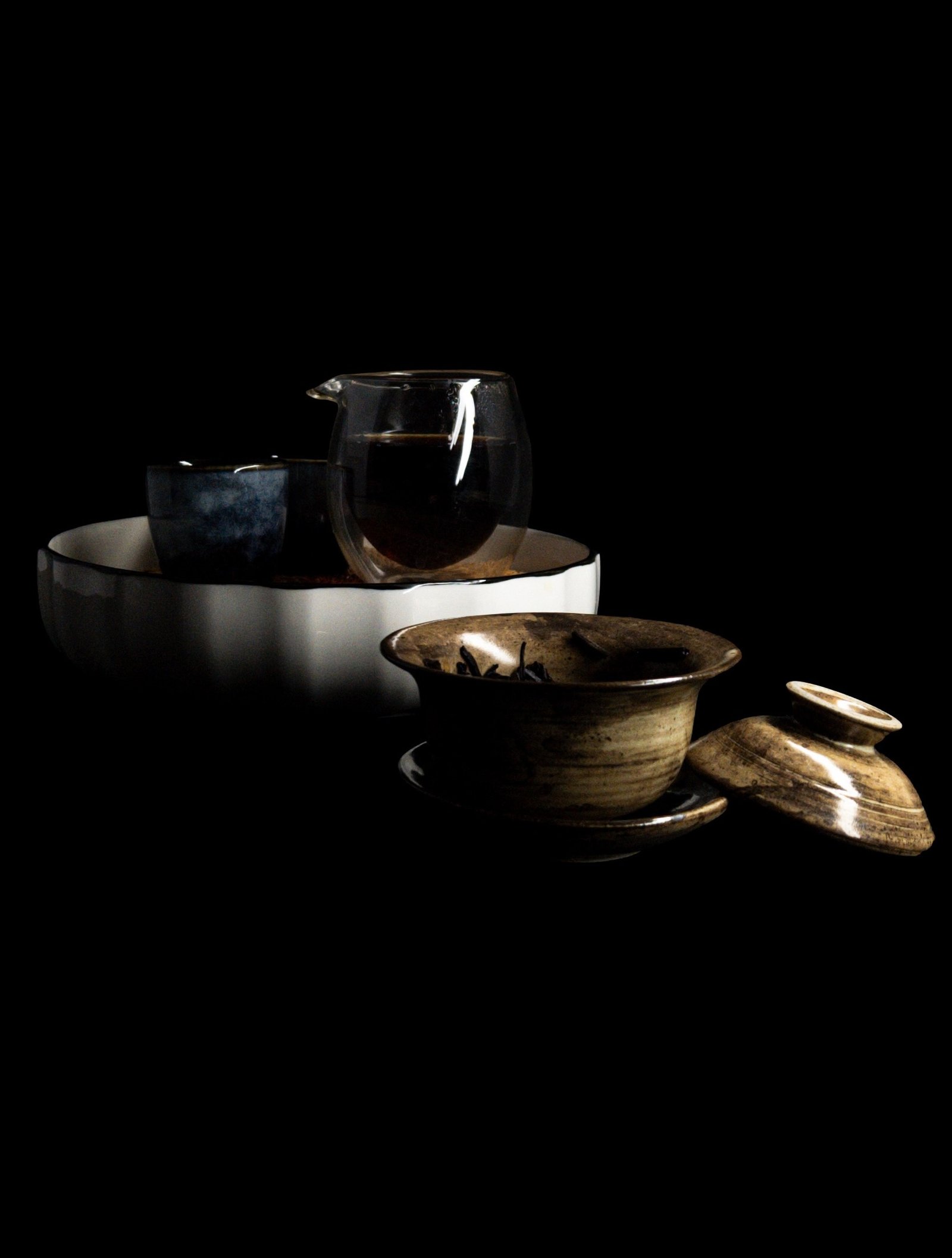
Skill does not automatically mean spectacle. A person can pay close attention to water, leaf, heat and pouring while the tea remains part of the day rather than a performance outside it.
Everyday does not mean careless. Some practitioners collect pots, compare teas and develop highly refined knowledge. Gongfu can be ordinary and connoisseurial at the same time. What it does not need to be is one fixed ritual.
That flexibility helped it travel.
Skill does not automatically mean spectacle.
How the gaiwan became more than a cup
The gaiwan did not spring into being as one finished object. Its parts have different histories. Tea bowls sat on stands in China long before the familiar three-piece set: the National Museum of China traces tea saucers back to the Southern Dynasties. A fifteenth-century Ming tomb yielded lidded bowls with stands, although these high-footed vessels are not the low, flared gaiwan familiar today. Neither an early saucer nor a lidded court bowl gives us a date for the invention of the modern gaiwan.6
By the Qing, the covered bowl was an established form. The Hong Kong Museum of Art dates covered bowls to the Kangxi period (1662–1722) and holds an early nineteenth-century example with lid, bowl and stand. As a drinking vessel, it was personal: leaves and water went into the bowl, and the drinker lifted the lid just enough to keep the leaves back while sipping. An illustrated account of tea service in Ryukyu, written by the Chinese envoy Xu Baoguang in 1721, also shows a covered bowl and stand. It is an early dated record of the form beyond China, not a record of its invention.7
But the bowl could also do the job of a teapot. In an account based on a 1762 encounter with Ryukyuan envoys, the Japanese scholar Tobe Yoshihiro described tea steeped in a lidded bowl, then poured into separate bowls for guests while the leaves stayed behind. This is an early explicit written record of the gaiwan as a shared brewing vessel, documented in Ryukyu. It does not establish when or where that way of using it began; it does show that pouring from a gaiwan predates modern tea art.8
In Chengdu, covered-bowl service became a signature of teahouse culture. In a 1957 account of Chaozhou gongfu, Weng Huidong described the gai-ou—another name for a covered bowl—standing in for a small teapot when there were many guests because it poured quickly. He treated this as a practical exception, not the standard Chaozhou method. Direct drinking and pouring into separate cups both have histories; neither can be claimed as the gaiwan’s one original or one correct use.9
The route went through Japan—and back
This is where the history becomes more circular.
Tea practices had travelled from China to Japan centuries before modern Taiwanese tea art appeared. Whisked powdered tea associated with Song China contributed to the ancestry of what developed into Japanese chadō. Japan did not simply preserve the Chinese practice unchanged; it developed its own institutions, aesthetics and ritual forms over centuries.10
Japan later developed senchadō, a tradition centred on steeped whole-leaf tea. Senchadō distinguished itself from the better-known matcha-based tea ceremony while consciously looking toward Chinese tea drinking and literati culture.11
So the history is not China inventing one finished practice, Japan borrowing it, and Taiwan eventually bringing the same thing home. Different branches of tea culture moved separately, changed in their new surroundings and later met again.
One branch was southern gongfu. Another was Japanese tea aesthetics—including senchadō, which already contained its own transformed engagement with Chinese tea.
They came together most visibly in twentieth-century Taiwan.
Taiwan gave gongfu a new public language
From the 1970s, Taiwan’s tea world was changing. The export economy that had supported Taiwanese tea was weakening. A growing domestic market, urban prosperity and renewed interest in cultural life created room for a different way of valuing tea.12
Tea practitioners and tea houses developed the language of chayi—tea art. Academia Sinica describes the term as a Taiwanese coinage that emerged from the mid-1970s into the early 1980s. The choice of chayi also distinguished the emerging field from the more formal associations of Japanese chadō.13
Gongfu offered a useful foundation. It already centred small vessels, skilled brewing, repeated infusions and a close relationship between the person preparing the tea and the people drinking it. It also had deep connections to the southern Chinese communities and tea practices already present in Taiwan.14
But modern Taiwanese tea art was not merely old gongfu with a new label.
The newer movement gave greater weight to the arrangement of the tea table, the visual relationship between objects, controlled bodily movement and a deliberately composed atmosphere. Tea houses created public places where practitioners could teach, experiment and turn brewing into a visible cultural form. New or newly standardised tools—including the tea pitcher used to equalise a brew before serving—became part of the now-familiar setup.15
And yes, Taiwanese practitioners borrowed selectively from Japanese tea culture.
Historian Lawrence Zhang points especially to senchadō: Japan’s tradition of steeped leaf tea offered examples of spatial composition, disciplined movement and aesthetic presentation that could be adapted more readily to gongfu than whisked-tea preparation itself.16
This was not simple copying. Taiwanese tea makers, merchants and practitioners were assembling something that answered their own historical moment. They used a regional Chinese brewing foundation, Taiwanese teas and teaware, local institutions, Japanese references and new cultural ambitions.
The result was inherited and newly made at the same time.
A practice becomes portable when people can recognise it
Everyday habits can be difficult to export because so much of their meaning remains unstated. A formalised version is easier to teach.
Once gongfu had a clearer public vocabulary—named tools, teachable movements, composed tea tables and dedicated tea spaces—it could circulate beyond the households and workplaces where it had grown.
From the late twentieth century, Taiwanese tea businesses, teachers and publications carried this tea-art language into mainland China. Cross-strait exchange increased. Tea shops demonstrated the method to customers. Training, hospitality and retail turned brewing into something that could be learned, repeated and recognised.17
At the same time, Chaozhou practitioners, local cultural advocates and the tea industry were also presenting gongfu as heritage. A 2020 study describes Chaozhou gongfu combining with Taiwanese and Fujian practices as it spread from the southeast coast further inland.18
The wider circulation is therefore not one arrow on a map. It is a network: regional custom, migration, commerce, cultural revival, tourism, scholarship, teaware, media and people teaching other people how to pour.
Eventually, the setup became legible even to people who had never been to Chaoshan or Taiwan. A small vessel, several cups and a precise pour could now stand for “Chinese tea.” Recognition travelled further than the original local context.
“Chinese tea ceremony” is useful—and incomplete
Calling gongfu the Chinese tea ceremony is understandable. It gives an unfamiliar audience a quick category. Some contemporary tea presentations are also genuinely formal and ceremonial.
The problem arrives when the phrase is heard as singular and timeless: one ceremony, always practised across China in essentially the same way.
That version removes the regional history. It hides the difference between tea made during an ordinary Chaoshan workday and tea arranged as a modern aesthetic performance. It makes Taiwanese innovation difficult to see. It also makes Japanese influence sound impossible, because everything must appear as one uninterrupted national inheritance.
A more accurate description is less tidy but more interesting.
Gongfu is a family of skilled tea practices with strong roots in southeast China. Its modern, globally recognisable forms were shaped through movement among Chaoshan, Fujian, Taiwan, mainland China, Japan and overseas communities. Different practitioners emphasise different things: taste, hospitality, technical control, aesthetics, meditation, heritage or simply time with other people.
There is no contradiction in calling that Chinese tea while refusing to call it all of Chinese tea.
Tradition is not the absence of change
We often ask whether a practice is old or modern as if only one answer can be true.
Gongfu makes that division difficult. Its material history reaches back centuries. Its everyday life in Chaoshan is real. So are Taiwan’s modern tea-art movement, the tools and aesthetics it helped popularise, the selected Japanese influences, and the later national and international circulation.
The movement resembles a feedback loop: older Chinese tea practices influenced Japan; Japanese tea traditions transformed those inheritances; Taiwanese practitioners later combined regional gongfu with selected Japanese ideas; and Taiwanese tea art helped reshape how Chinese tea became recognised in mainland China and internationally.
The practice remained alive precisely because people kept changing what it could do.
The small pot and tiny cups are not a frozen picture of China.
They are evidence of tea in motion.
Sources & Notes
- Lok Cheung Lawrence Zhang, “A Foreign Infusion: The Forgotten Legacy of Japanese Chadō on Modern Chinese Tea Arts,” Gastronomica 16, no. 1 (2016): 53–62, https://doi.org/10.1525/gfc.2016.16.1.53. Zhang discusses Yuan Mei’s 1792 account of Wuyi tea.
- Zhang, “A Foreign Infusion”; Peter H. N. d’Abbs, “Art as Everyday Practice: A Study of Gongfu Tea in Chaoshan, China” (master’s thesis, University of New England, 2018), https://rune.une.edu.au/entities/publication/3d7736be-4b4a-488c-876a-67bffe6485c3. Yu Jiao’s wording begins with 工夫茶 and the work was completed in 1801 after his Guangdong posting.
- Peter d’Abbs, “Tea Art as Everyday Practice: Gongfu Tea in Chaoshan, Guangdong, Today,” The Asia Pacific Journal of Anthropology 20, no. 3 (2019): 213–231, https://doi.org/10.1080/14442213.2019.1611908.
- Zhang, “A Foreign Infusion,” citing Lin Yutang’s The Importance of Living.
- d’Abbs, “Tea Art as Everyday Practice.”
- National Museum of China, “White-Glazed Lobed Cup with Saucer,” https://www.chnmuseum.cn/zp/zpml/201812/t20181218_28093.shtml; Zhang Yanfen, “Tea Vessels in Ming Court Rituals,” Palace Museum Journal (2023), https://www.dpm.org.cn/Uploads/File/2023/09/15/u6503ceb590455.pdf. The Ming tomb vessels are probable tea wares, not identical to a modern gaiwan.
- Hong Kong Museum of Art, “Covered Bowl with Calligraphic Inscriptions in Underglaze Blue,” https://hk.art.museum/en/web/ma/tea-ware-collection.html; Zheng Hanyun, “On Ryukyuan Tea Culture,” National Palace Museum, discussing Xu Baoguang’s illustrated Zhongshan Chuanxin Lu (1721), https://www.npm.gov.tw/NewChineseArtDownload.ashx?bid=5186.
- Tobe Yoshihiro, Ōshima Hikki (account based on a 1762 encounter), preserved in the University of the Ryukyus digital collection, https://shimuchi.lib.u-ryukyu.ac.jp/collection/sakamaki/hw72603. The covered-bowl passage is transcribed and discussed in Okamoto Hiromichi, “Multilayered Structure of Tea Culture in Early-modern Ryukyu,” Kansai University (2011), https://kansai-u.repo.nii.ac.jp/records/2233; see also Zhou Zhaohui, “Tea in Okinawa,” an excerpt from A Thousand Years of Japanese Tea Culture, https://m.thepaper.cn/newsDetail_forward_17506547. This is an early attestation, not proof of first use.
- Memory of the World Committee for Asia and the Pacific, “Archives Relating to Chengdu Traditional Teahouses,” https://www.mowcapunesco.org/register/archives-relating-to-chengdu-traditional-teahouses-2024/; Weng Huidong, Chaozhou Tea Classic: Gongfu Tea (preface dated 1957), “盖瓯” section, transcribed at https://www.sohu.com/a/125495080_488574. The Chengdu archive spans 1903–1949 but does not establish when covered-bowl service began.
- Zhang, “A Foreign Infusion,” note 6. The claim concerns historical ancestry; modern chadō developed in Japan rather than arriving as a complete system.
- Zhang, “A Foreign Infusion.”
- Academia Sinica, “茶金歲月後,臺灣茶文化出現哪些新創的傳統?” https://research.sinica.edu.tw/taiwan-tea-culture/.
- Academia Sinica, “跟人類學家喝茶去 民族所博物館特展開幕,” 31 March 2021, https://www.sinica.edu.tw/news_content/55/715.
- Zhang, “A Foreign Infusion.”
- Zhang, “A Foreign Infusion”; Academia Sinica, “茶金歲月後.”
- Zhang, “A Foreign Infusion.”
- Zhang, “A Foreign Infusion”; Academia Sinica, “跟人類學家喝茶去.”
- Xiao Kunbing and Li Jinglai, “From Skill to Art: The Modernity of Chaozhou Gongfucha,” Journal of Chinese Dietary Culture 16, no. 2 (2020): 223–266, https://www.airitilibrary.com/Article/Detail/18119301-202010-202012180005-202012180005-223-266.