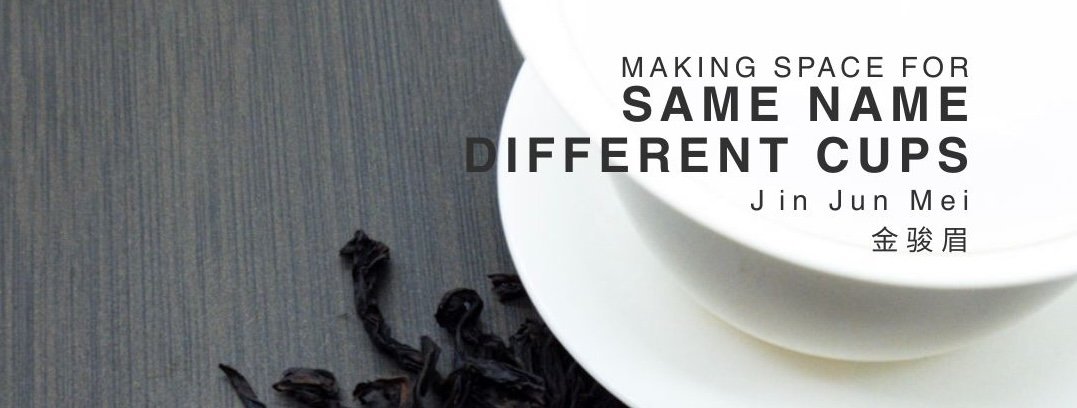
Why can the same tea taste different when two packages carry the same name?
That was me with Jin Jun Mei.
The first cup, tasted in China, reminded me of cornflakes, plain graham crackers, and a little Horlicks. Strange, comforting, and completely unlike any black tea I had met before.
Later, I found another Jin Jun Mei locally, also imported from China. I bought a sample hoping to return to something familiar.
Instead, it was savoury, slightly acidic, and almost like tomato paste.
Memorable? Definitely.
My cup of tea? Not quite.
Why the same tea tastes different
Tea names help us navigate. They may point toward a style, place, cultivar, appearance, process, grade, story, or commercial category. But a shared name does not mean that two batches will be identical.
Agricultural products change. Weather changes. Picking standards, leaf material, processing decisions, sorting, storage, and time all change what reaches the cup. Commercial sourcing and labelling add another layer. Sometimes the available information is precise. Sometimes a familiar name is doing more work than the documentation behind it.
That does not make names useless. It makes them questions.
Where was this tea grown? Who made it? When was it harvested? What material was selected? How was it processed and stored? Which of those details are documented, and which are assumptions carried by the label?
The more specific the answer, the more meaningful the comparison becomes.
Brewing is part of the result
Even two portions from the same batch can taste different when the water, vessel, ratio, temperature, timing, or pouring speed changes.
That is why a comparison benefits from a little discipline. Start with the same repeatable method, then adjust by response; our brewing guide offers a practical baseline. Use the same water. Match the vessels and leaf amounts as closely as practical. Taste the teas at similar temperatures. Repeat the comparison on another day before turning one surprising cup into a permanent conclusion.
Consistency does not remove subjectivity. It gives subjectivity a clearer view.
In my two Jin Jun Mei experiences, the settings were not identical. They were encounters separated by place and time, not a laboratory trial. The contrast is still useful, but it should be described honestly: one memory, one later sample, and a large sensory distance between them.
Difference is information
It is tempting to ask which tea is the real one or which is better. Sometimes that question is necessary, especially when provenance claims are specific. But for drinking, a different question may be more useful first: what is this cup actually doing?
Look at the leaves. Smell them dry and warm. Notice the body and texture, not only the flavour references. Pay attention to the finish and what remains after swallowing. Watch how the tea develops from one infusion to the next.
The savoury cup did not become more enjoyable because it carried a name I already liked. The familiar name created an expectation; the tea answered with its own character.
That gap was the lesson.
Buy the tea, not only the category
When possible, buy a sample before committing to a larger quantity. Read the seller’s information, but keep room for your own experience. Ask for harvest, origin, producer, and storage details when those claims matter to the price.
Most importantly, allow two teas with the same name to be different.
A label can point you toward the cup. It cannot drink it for you.